The Chinese Institute of Food Science and Technology (CIFST) has announced the results of its 2026 Science and Technology Award. Jiangsu University (JSU) won two first prizes and two second prizes.
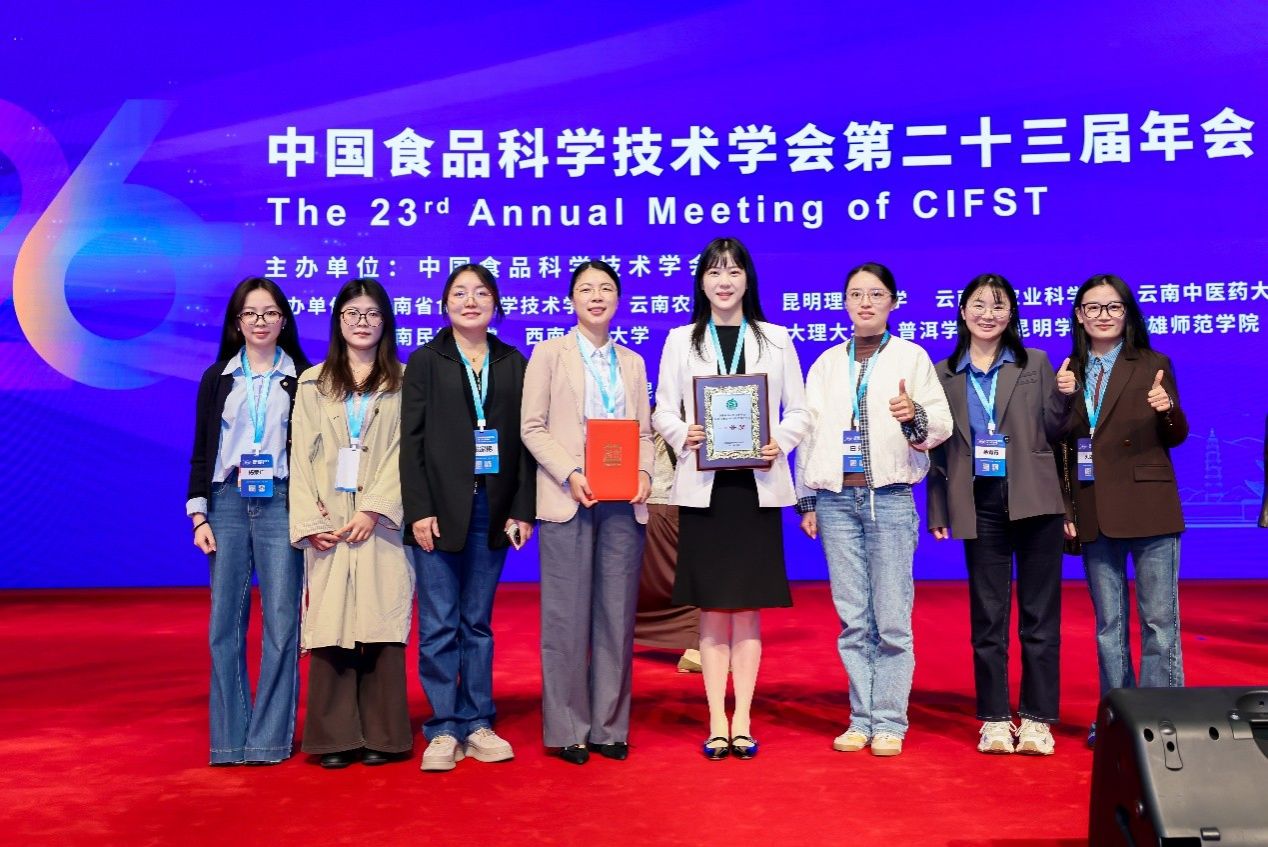
The first-prize projects are “Key Technologies and Applications of Targeted Screening of Lactic Acid Bacteria and Precise Regulation of Intelligent Fermentation,” led by Prof. Xiao Xiang and completed with Jiangsu Hengshun Vinegar Industry Co., Ltd. and the University of Shanghai for Science and Technology; and “Key Technologies and Industrialization of Fermented Noodles Created with Low-Gas-Producing Yeast CDLBYE05,” led by Associate Prof. Qi Yajing and Prof. Xu Bin and completed with Shenzhen Peptide Bio-Technology Co., Ltd. and Hunan Yingshi Nutritional Food Co., Ltd. The second-prize projects are “R&D and Application of Key Technologies and Equipment for Precise Perception and Regulation in Industrialized Chinese Food Processing,” led by Prof. Huang Xiaowei; and “Technological Innovation and Equipment Creation and Application of Near-Infrared Photoelectric Intelligent Sensing Detection for Food Quality and Safety,” led by Prof. Li Huanhuan.
The first project responds to the “Healthy China” initiative and the “Big Food Concept.” Targeting bottlenecks in China’s fermented food industry — the low self-sufficiency rate of core strains, outdated starter culture preparation and limited intelligent control of fermentation — the team developed technologies and equipment for the targeted screening of lactic acid bacteria strains, the preparation of high-activity starter cultures and the intelligent regulation of fermentation quality, and promoted their industrial application. The results support the upgrading of the industry toward functional, high-end and intelligent production.
The second project addresses challenges in the industrialization of fermented noodles, including the lack of dedicated strains, difficulty in controlling fermentation, unstable flavor and texture, and a short shelf life. Using low-gas-producing yeast CDLBYE05, the team integrated dedicated flour screening, strain development, micro-fermentation process innovation and supporting intelligent equipment to establish a noodle micro-fermentation processing system with independent intellectual property rights. Several key technologies have reached an internationally advanced level. Application of the technology has improved the flavor and texture of the noodles, extended the shelf life and shifted production from experience-based judgment to data-driven control and standardized management, offering a replicable path for the industrialization of traditional flour products.
(Source: School of Food Science and Engineering; Frontier Technology Office; Industry-University-Research Cooperation Office)